Encountering the Roots of the Process Worldview and Experiencing the Key Ideas in Process and Reality
This course is the first in a series of five that are part of our 2026 Certificate Program in Process Thought & Practice. A limited number of seats are available for individuals not participating in the program.
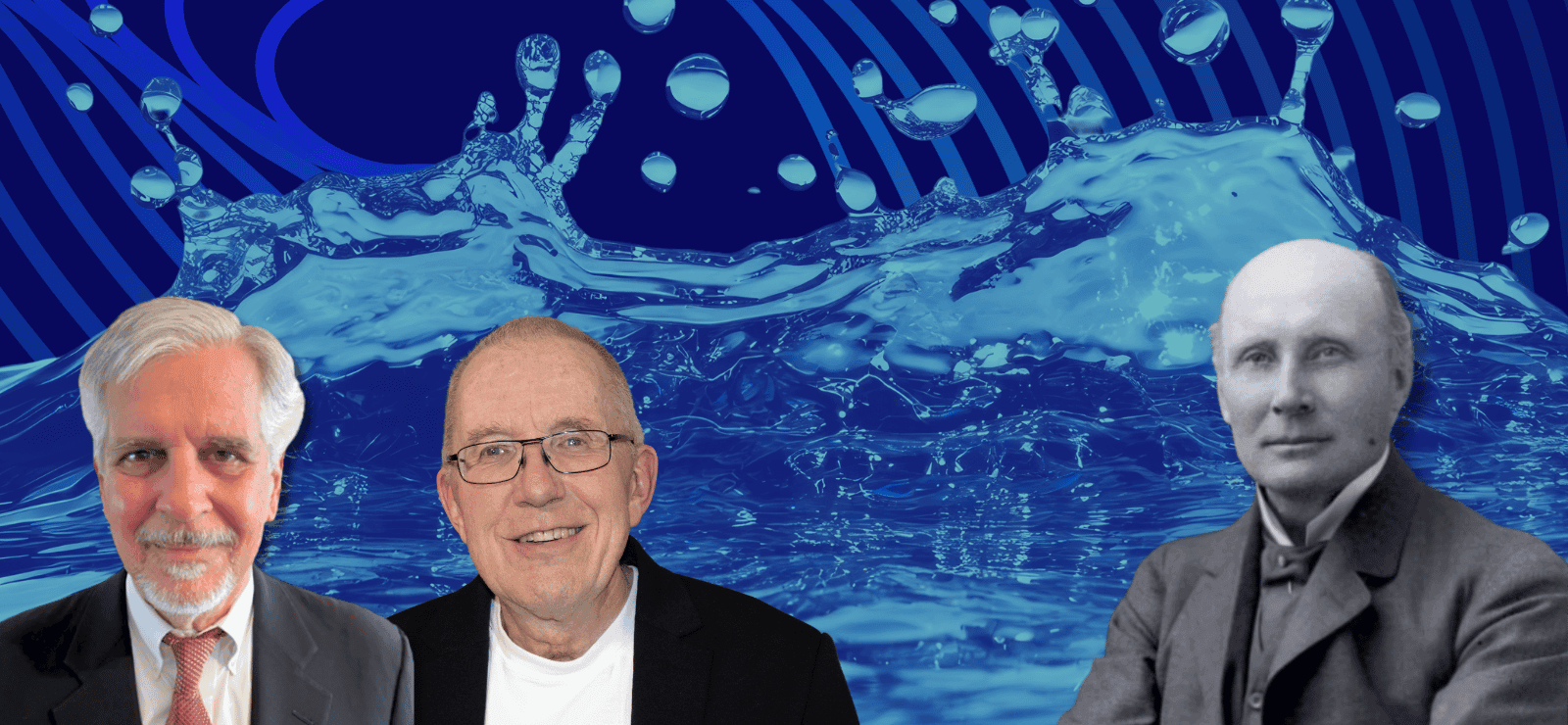
- WHO: Jay McDaniel and Chris Hughes
- WHAT: Six Interactive Sessions
-
WHEN: Weds, 5:00 – 7:00pm Pacific
April 15 – May 20 - WHERE: Online via Zoom
This six-session course will provide students with a foundation for understanding some of the key concepts and technical terms in Whitehead’s speculative philosophy, and give them the opportunity to encounter his philosophy experientially.
Attend the live class sessions
or work at your own pace.
Course Summary
This six-session course offers participants a guided introduction to Whitehead’s worldview, providing both conceptual grounding and experiential entry points into process philosophy. Participants may engage the material at varying depths, moving fluidly between experiential reflection and theoretical analysis, according to their interests and learning goals.
The course is supported by a Canvas-based learning platform. The platform is designed to help participants engage Whitehead’s ideas at both experiential and theoretical levels, accommodating diverse learning styles and vocational contexts.
At the heart of the Canvas course is a focused glossary of twenty six key terms, drawn largely from John Cobb’s Whitehead Wordbook. Cobb’s Wordbook covers fifty terms and is intentionally designed to help individuals and groups read Process and Reality in a careful, patient, and conceptually grounded way.
The elucidation of immediate experience is the sole justification for any thought; and the starting point for any thought is the analytic observation of components of this experience.
–Alfred North Whitehead, Process and Reality
Course Outline
Session 1: Methodology and The Fundamental Units
The course begins by establishing the scope of the inquiry: Speculative Philosophy. To engage in this philosophy effectively, we must first identify and overcome linguistic barriers, specifically the Fallacy of the Perfect Dictionary, which assumes language is already adequate for describing reality. We then drill down to the fundamental atomic unit of reality: the Actual Entity. We examine this unit in its temporal character as an Actual Occasion and broadly define it as an Occasion of Experience.
Session 2: The External World and Social Order
Once the “unit” is understood, we look outward to how these units accumulate to form the Actual World. We discuss how we perceive clusters of activity as Events. To understand the definite character of these events, we introduce Eternal Objects (pure potentials). We then explore how actual entities group together to form a Nexus, and how specific types of grouping result in Enduring Objects or Personally Ordered Societies and Corpuscular Societies —what we commonly recognize as physical matter.
Session 3: Connection, Feeling, and Perception
This session explains the mechanics of relationship. We explore Prehension as the way one entity “feels” another. We introduce the Proposition as a lure for feeling that bridges potentiality and actuality. We then analyze human experience through Perception in the Modes of Causal Efficacy and Presentation or Immediacy, explaining how we synthesize these two distinct modes via Symbolic Reference to construct our conscious reality.
Session 4: The Internal Process of Becoming
We then journey inside the actual occasion to understand its self-creation. This involves the Subjective Aim and Decision that drives the entity’s purpose. We learn to analyze the entity through both Coordinate and Genetic Division of Actual Occasions. We examine the process of Concrescence and Time, seeing how time is generated by the becoming of occasions, and break this process down into the specific Phases of Concrescence.
Session 5: Ultimate Agency and Cosmology
This session tackles the metaphysical engine driving the process. We posit Creativity as the Ultimate principle of novelty. We then discuss the non-temporal actual entity, God, and the vital role God plays in providing the Initial Aim to every nascent occasion, thereby offering order to creativity.
Session 6: The Metaphysical Framework
The final session details the “container” and the rules of the system. We map out the Extensive Continuum and its Regions which provides the potential for division and relationship. We conclude by cementing the philosophical logic with The Subjective Principle and the Reformed Subjectivist Principle, and finally, The Ontological Principle, which asserts that actual entities are the only reasons for anything.
About the Instructors
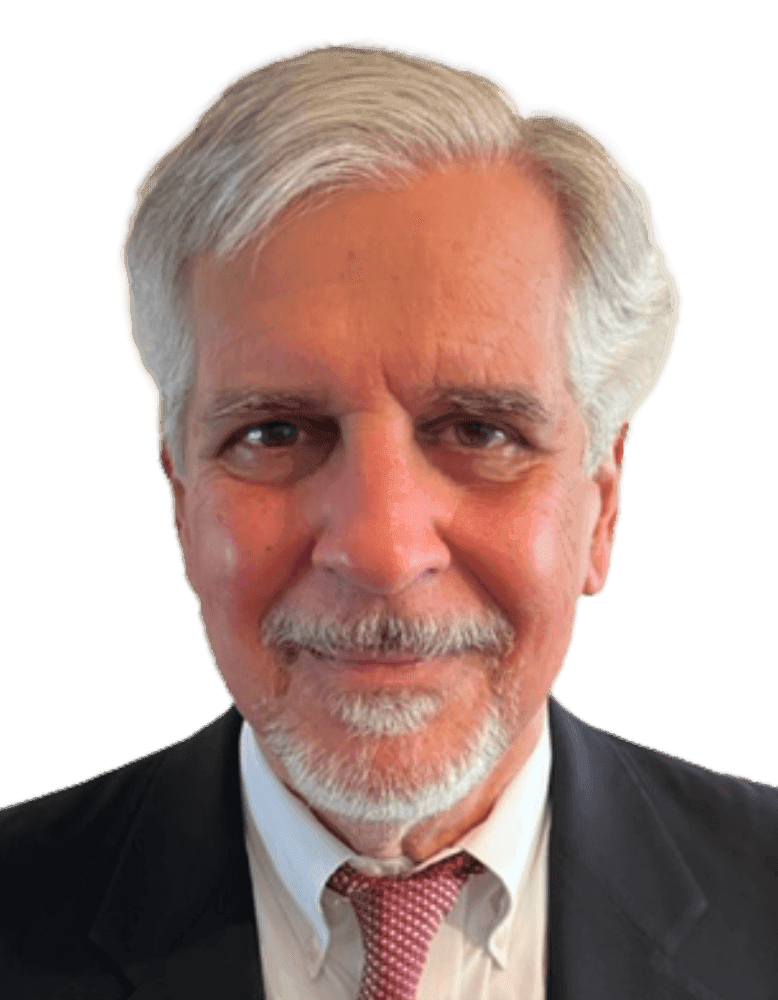
Jay McDaniel
Jay McDaniel is a philosopher and theologian known for his work in process theology and open and relational thought. Influenced by Alfred North Whitehead, his writing explores the relational nature of reality, the role of creativity in the universe, and the spiritual significance of everyday life. He has long been associated with the Center for Process Studies and with Open Horizons, where he helps develop resources that connect philosophy, spirituality, ecology, and the arts. McDaniel writes for both academic and general audiences, often drawing on literature, music, theater, and nature to illuminate philosophical ideas. His work emphasizes compassion, imaginative freedom, and the possibility of cooperative and sustainable communities. A teacher, essayist, and musician, he is especially interested in how process philosophy can enrich religious life, interfaith dialogue, and public culture. Through essays, courses, and collaborative projects, he seeks to make complex philosophical ideas accessible and practically meaningful for contemporary life.

Chris Hughes
Chris Hughes is the Dean of the Certificate Program and creator of the Canvas learning platform for the Discovering Whitehead course. He is an award winning Canadian educator who has created teaching materials to bring process thinking to a wider audience. Chris came to Canada from the UK in 1975 after earning a BA in Psychology from Durham University. In 1986 he earned a B.Ed with a major in Science from the University of Calgary. Along the way he picked up courses and skills in experimental psychology from the University of McMaster and in philosophy from the University of Calgary. Prior to 1986 when he started a 30+ year High School teaching streak (Math and Physics), he worked with young people who were “at risk” or who had custodial sentences. Towards the end of his teaching career, he trained as a Mindfulness Instructor with the British Mindfulness in Schools Project and taught Mindfulness to both students and teachers. Chris lives in Calgary, Alberta and is always looking forward to that brief pause between the end of one ski season and the start of the next.
Share on Social Media
Help us spread the word by sharing the course on social media.
Tag us @ctr4process.
Price
- Lifetime access to course session recordings
- Receive early notification of future courses
- Watch live or follow your own schedule
- Interact with course participants via discussion forum